Creating and editing model statements in XactAdmin - Profiles
 Updated
by
Jill Bowers
Users can create closing and opening statements inside XactAdmin. Profile owners and instance admins can set statements as defaults for profiles, instances, and locations; however, setting defaults is not required.
You can learn more about what model statements are and the different types of model statements available by reviewing our Model statements in XactAdmin article.
Before you can create statements and assign them as defaults, you must be a profile owner in XactAdmin. To gain profile owner rights, reach out to your administrator.
Find Statements in Profiles
- From within XactAdmin, select Profiles.
- Select your profile from the table.
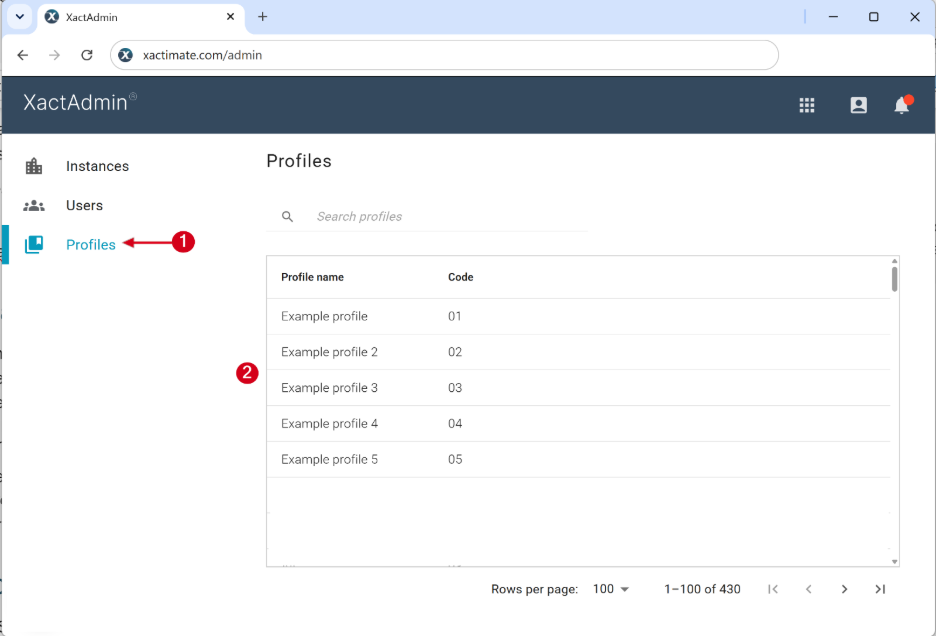
Note: If you only have one profile, you are taken directly to the Depreciation tab instead.
- Select the Statements tab.
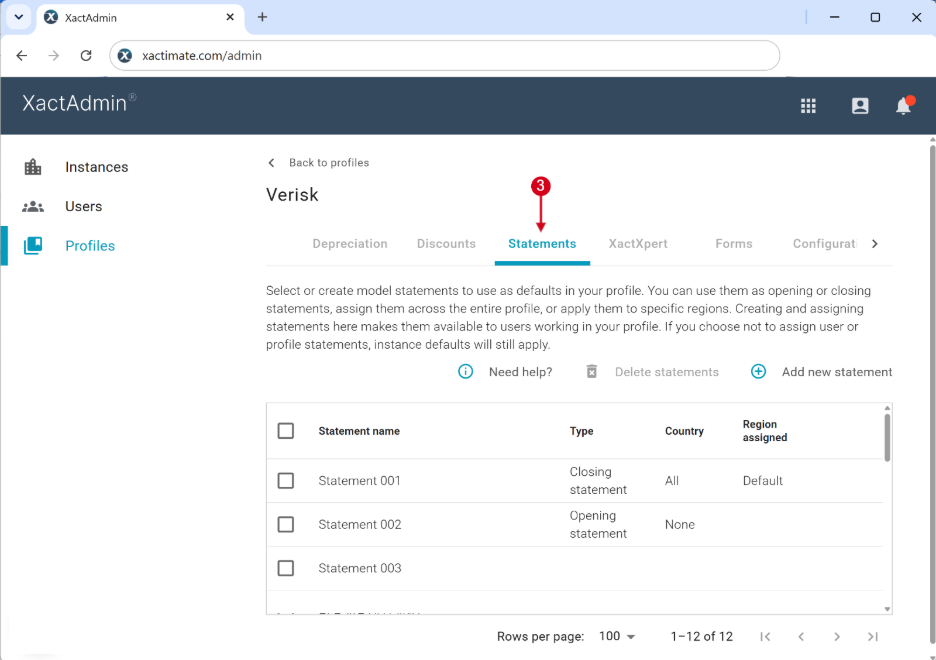
Note: Depending on your settings, you may need to scroll to the right to find the Statements tab.
Add a profile statement
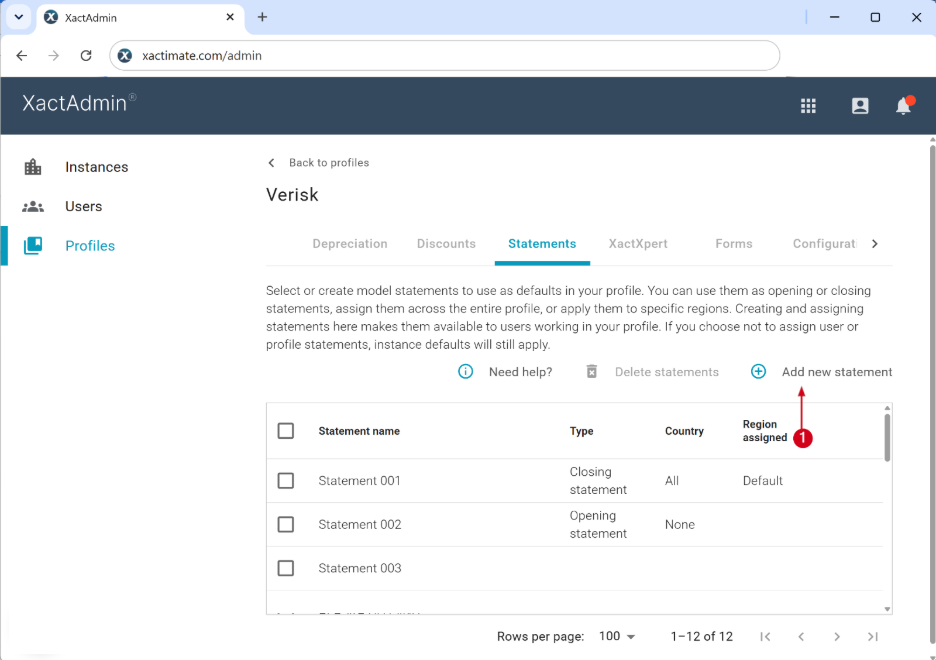
- Select the Add new statement button above the table in the Statements tab to open the Add new statement side drawer.
- Add the statement’s name.
- Select the Edit icon in the lower-left corner of the Statement content box.
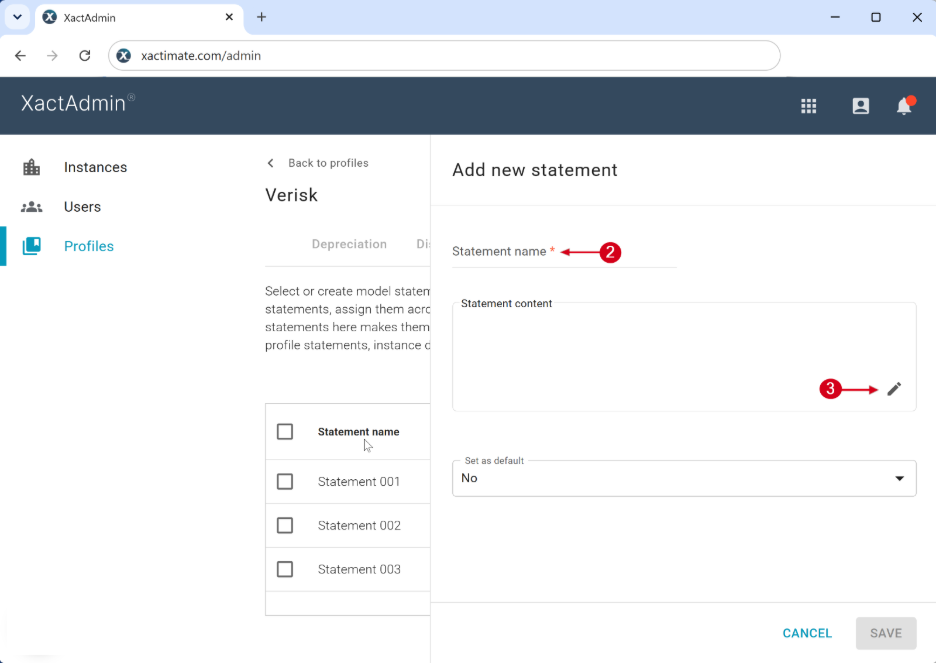
- Write your model statement in the new window.
- Select Save.
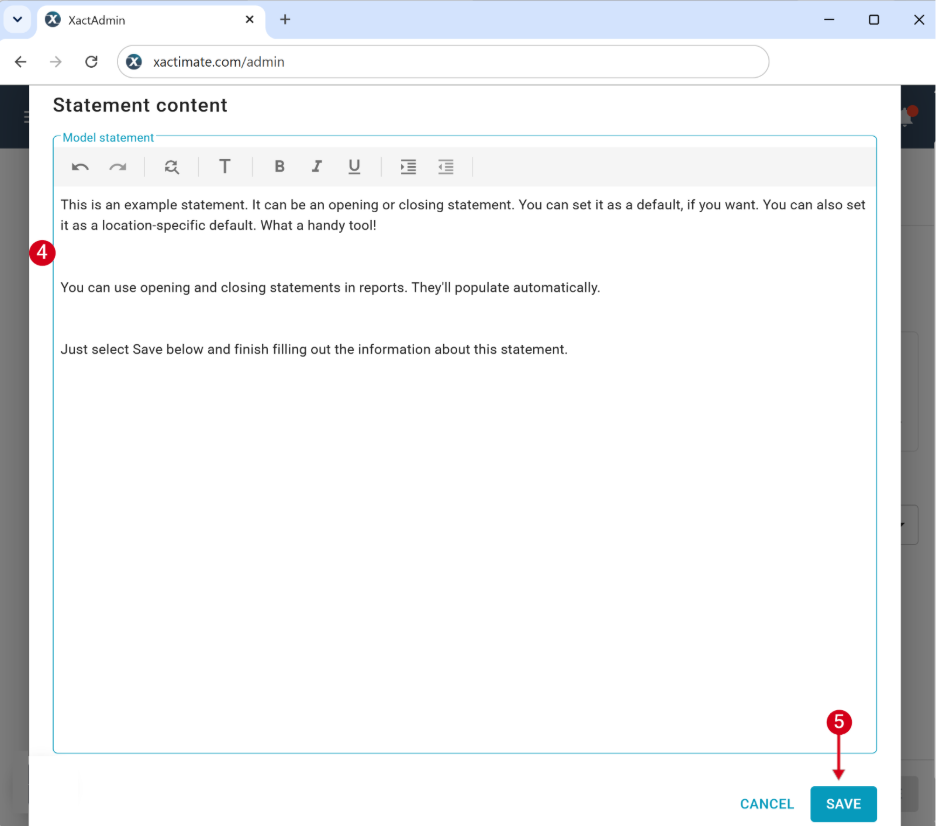
To learn how to add settings for your statement, continue to the Set statement defaults section.
Edit a profile statement
- Select the row of the statement you want to edit.
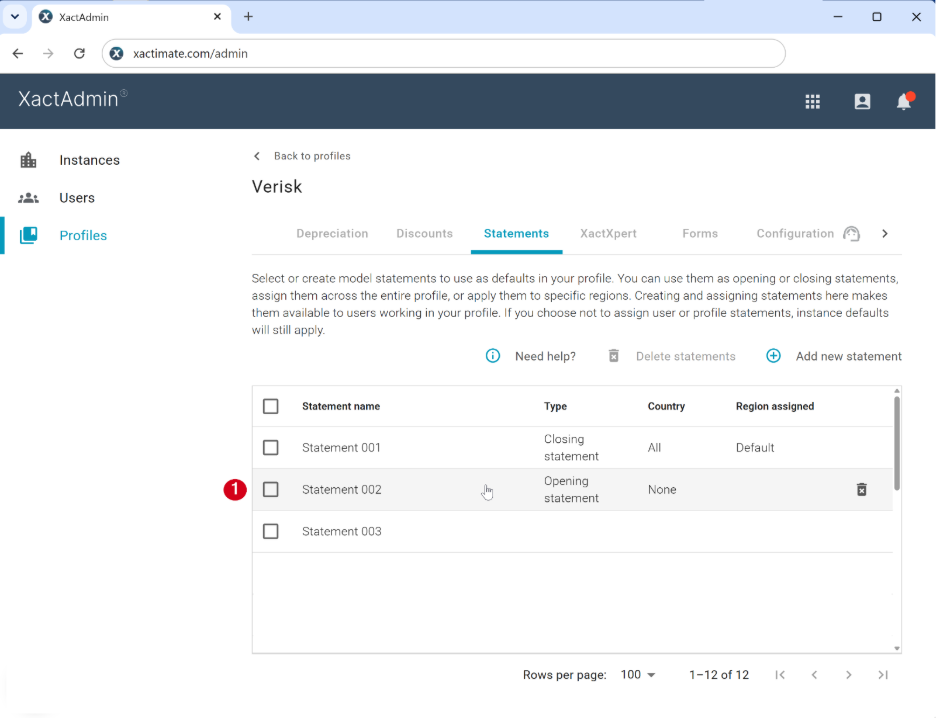
- Edit the statement’s name, if desired.
- Select the Edit icon in the lower-left corner of the Statement content box.
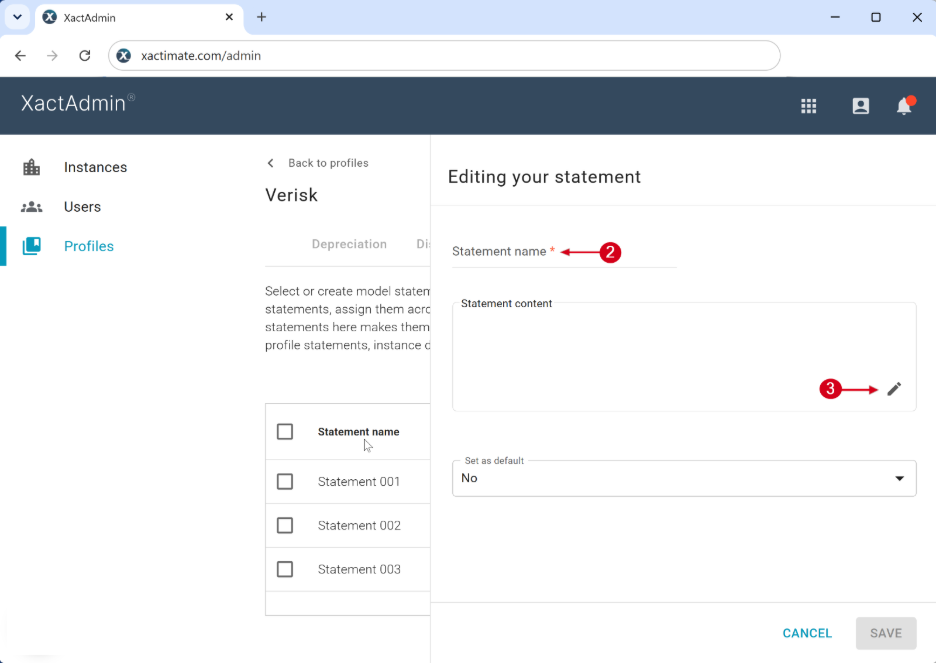
- Edit your model statement in the new window.
- Select Save.
To learn how to add settings for your statement, continue to the Set statement defaults section.
Set statement defaults
Select an option from the Set as default dropdown menu in the side drawer. Choices include
- No. To keep the statement from becoming the new default, select No from the dropdown menu and select Save.
- Default. Select this option to set a non-location-specific default.
- United States. To set a statement as the default for one or more states, select United States.
- Canada. To set a statement as the default for one or more provinces, select Canada.
Set statement as profile default
- To designate the statement as a non-location-specific default, select Default from the dropdown menu.
- Select the appropriate radio button in the Type section to identify the statement as opening or closing.
- Select Save.
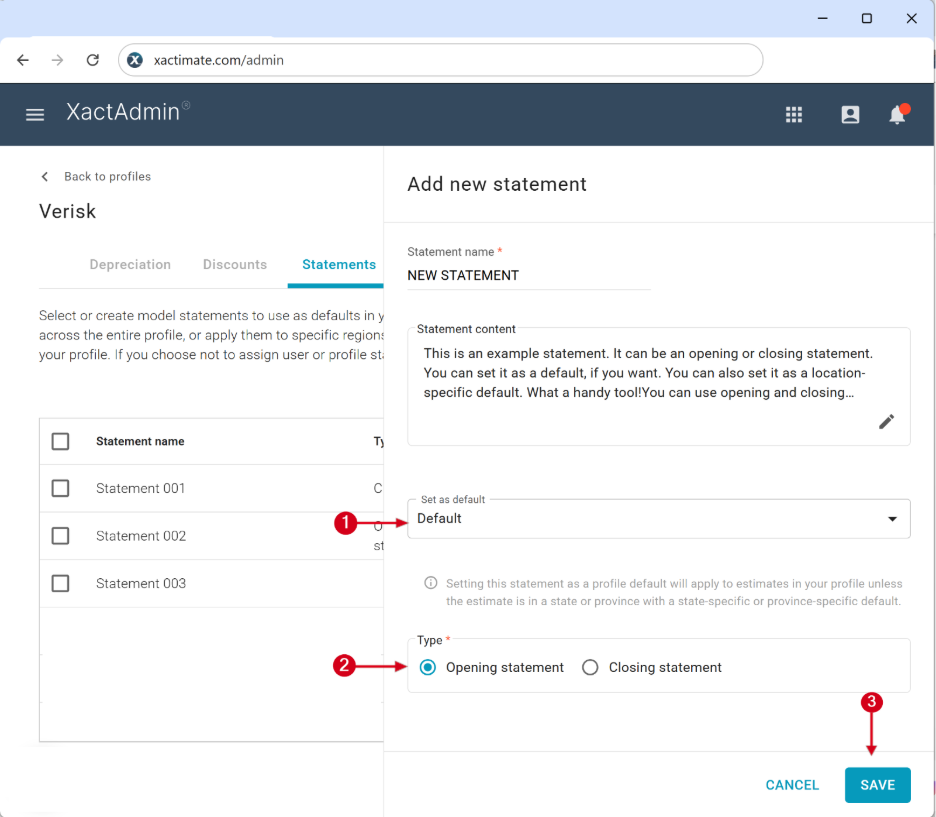
Set statement as state-specific default
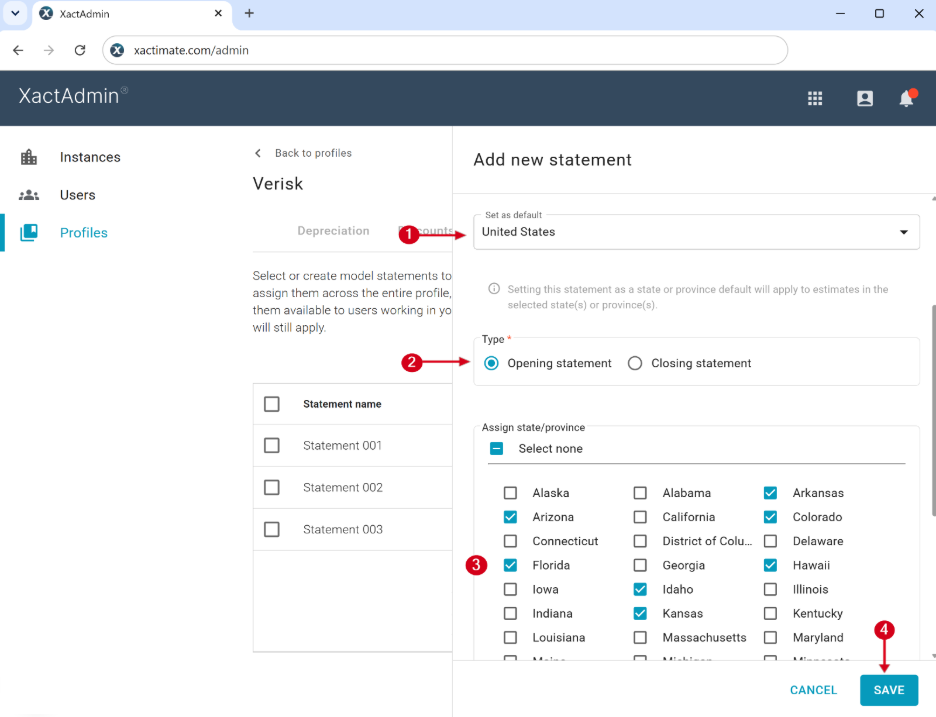
- To set the statement as a state-specific default in the United States, select United States from the dropdown menu.
- Select the appropriate radio button in the Type section to identify the statement as opening or closing.
- Select the state(s) for which the statement will be a default, or select the Select all checkbox to assign the statement to all states.
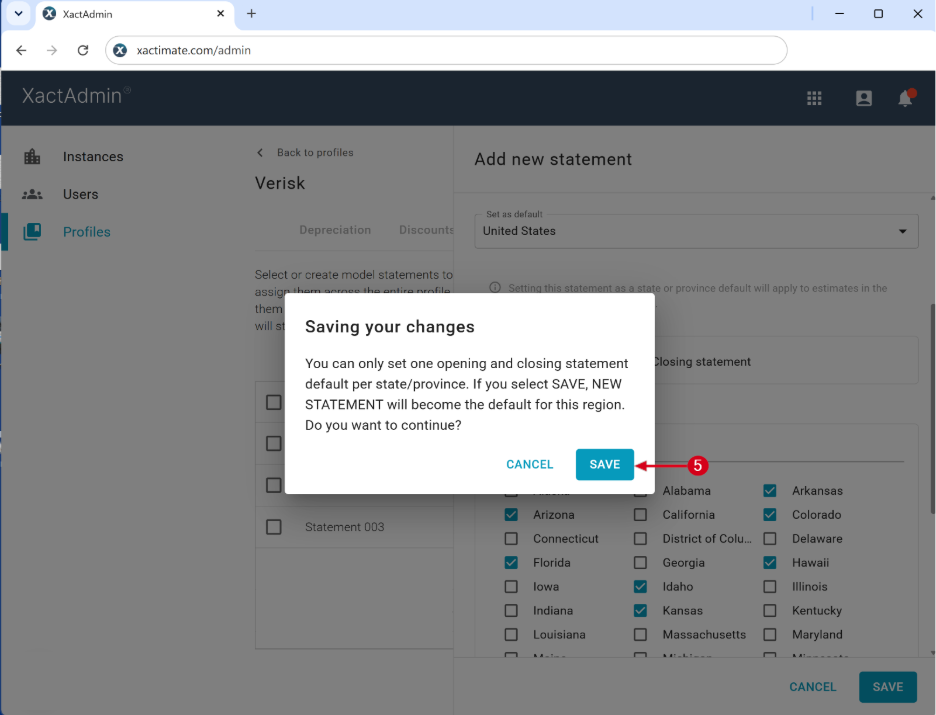
- Select Save. The Saving your changes dialog opens.
- Select Save.
Set statement as province-specific default
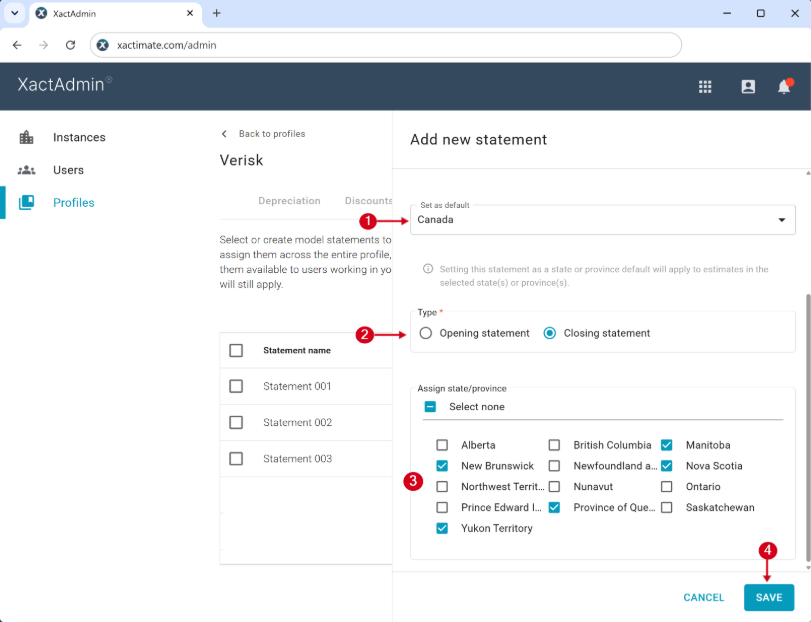
- To set the statement as a province-specific default in Canada, select Canada from the dropdown menu.
- Select the appropriate radio button in the Type section to identify the statement as opening or closing.
- Select the province(s) for which the statement will be a default, or select the Select all checkbox to assign the statement to all provinces.
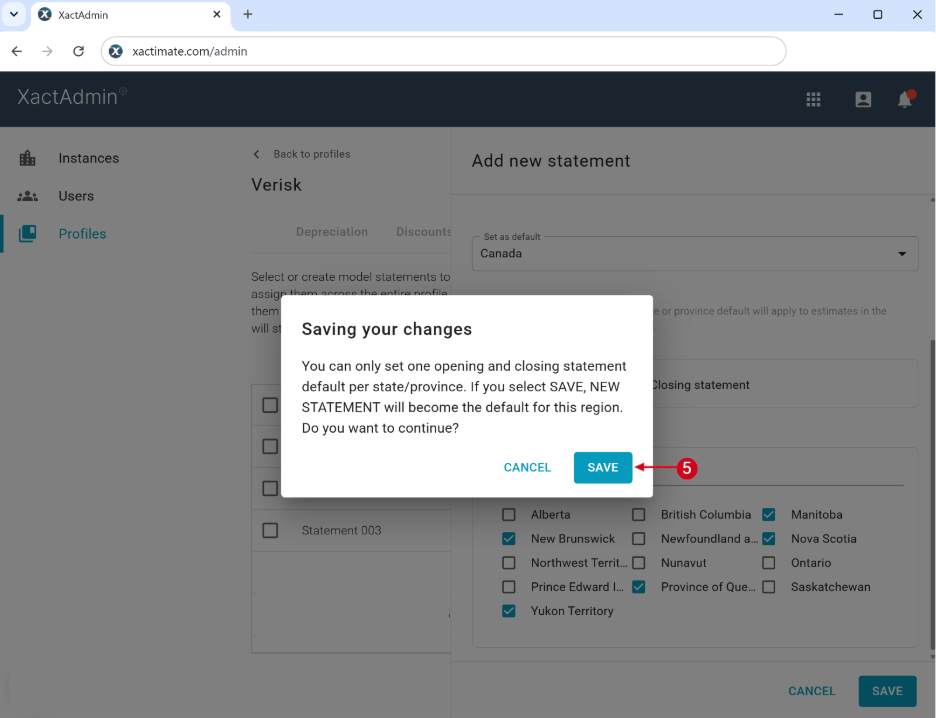
- Select Save. The Saving your changes dialog opens.
- Select Save.
Note: Setting a new statement as a default does not eliminate other statements; only the default is overwritten, not the statement itself.
Note: When you assign a statement to a state or province, the statement automatically becomes the default for all projects in your instance within that state or province. If there is no state or province statement default, the instance statement becomes the default. To learn more about how default statements are determined, read the Model statements in XactAdmin article.
With these workflows, you can create or edit statements and designate them as different types of defaults. To learn more about the order in which defaults apply, see our Model statements in XactAdmin article.